Skip to content
 Creating the perfect pool deck goes beyond aesthetics, it affects comfort, safety, and long-term durability. Have you ever stepped onto a scorching deck in summer or noticed wood warping after heavy rain?
The materials for your pool deck play a crucial role in determining its performance under the sun, moisture, and seasonal changes. Choosing the right materials for pool deck projects is essential for durability and style. Homeowners often look for the best pool deck materials that can withstand seasonal changes. For above ground pool deck materials, safety and slip resistance are key. Pool deck flooring options include wood, composite, and stone, each offering unique advantages.
In this guide, we’ll walk you through the key factors to address, helping you make a smart, long term investment for your outdoor space. Join us and get ready to transform your home!
Why Choosing the Right Materials for Pool Deck Matters
When considering the best pool decks for New Jersey climate, homeowners should prioritize weather resistance and low maintenance. For reliable pool deck construction in New Jersey, Cherry Hill pool deck contractors provide expertise, helping families create outdoor spaces that last through hot summers and icy winters.

Selecting the right materials for your pool deck is crucial for security, comfort, and style. Making informed decisions now can prevent costly repairs or replacements in the future, ensuring your deck lasts for years of enjoyment.
Safety and Slip Resistance in Wet Areas
Slip resistance is one of the most essential factors for pool decks. Materials like textured concrete, rubber, and certain composites provide better grip, reducing the risk of falls.
It’s also essential to consider children and elderly family members, as certain surfaces can become dangerously slick when wet. Prioritizing safety ensures a worry free environment for everyone using your pool area.
Durability Against Sun, Water, and Weather
While aesthetic appeal matters, durability is equally important. Consider factors such as UV resistance, water absorption, freeze thaw stability, and overall weathering resistance.
High quality materials reduce the need for frequent repairs and help your deck withstand the effects of seasonal changes. Selection of durable options means your investment remains functional and beautiful, no matter the climate challenges your area faces.
Comfort and Style to Match Outdoor Living Spaces
Your pool deck should complement your home’s style while offering comfort. Materials that balance heat retention, slip resistance, and visual appeal create a welcoming environment for entertaining or relaxing. Additionally, thoughtful selection of texture and color can enhance your outdoor living area, making it a true extension of your home.
Best Pool Deck Materials for Different Climates
Your local climate plays a big role in material selection. Considering weather patterns will help you avoid premature damage, warping, or fading.
Concrete and Pavers for Hot, Dry Regions
In hot, dry areas, concrete and pavers provide durability and comfort. Light colored concrete reflects sunlight, keeping your deck cooler underfoot. Textured pavers improve slip resistance, and regular sealing prevents cracks from heat expansion.
Integrated drainage systems effectively manage water, protecting both your deck and surrounding landscaping. These measures ensure your pool area remains sturdy and stylish even in extreme summer temperatures.
Natural Stone and Tile for Humid Climates
In humid climates, natural stone and tile resist moisture, thereby preventing the growth of mold and mildew. Their textures enhance safety, and their variety of styles allows you to create a visually stunning, functional outdoor space.
Regular cleaning and sealing help maintain their appearance, making these materials a long term solution for areas prone to rainfall and high humidity.
Composite and Wood Options for Moderate Areas
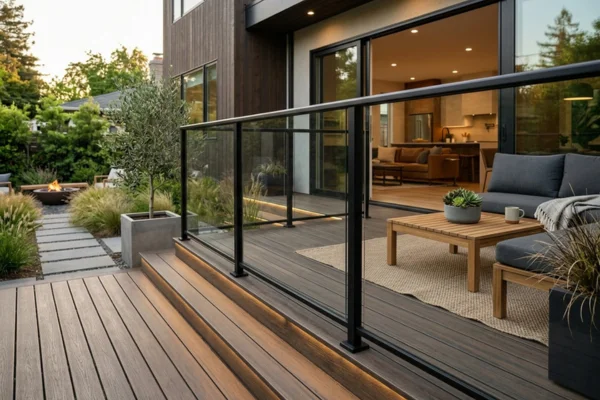
For moderate climates, composite and wood decking offer a balance of beauty and durability. Composites resist moisture and fading, while treated wood provides a natural aesthetic.
Both options require minimal maintenance, allowing you to enjoy your pool without excessive upkeep. Slip resistant surfaces and eco friendly materials further enhance comfort and sustainability.
What Are the Best Materials for Above-Ground Pool Decks?
Above ground pool deck materials need to be sturdy, lightweight, and low maintenance. Check out:
- Composite decking for moisture resistance.
- Aluminum for strength and easy upkeep.
- Treated wood for a natural look.
Each option has its pros and cons, but all can create a secure, inviting pool area when appropriately installed.
Comparing Pool Deck Flooring Options
Different flooring options provide unique benefits for appearance, functionality, and maintenance.
Concrete Stamping vs. Poured Concrete Flooring
Stamped concrete adds patterns and textures for a decorative finish, while poured concrete is more budget friendly. Both are durable, though stamped surfaces may require occasional maintenance. Poured concrete sets faster, which can reduce pool deck installation time.
Choosing the right option depends on your style preference, budget, and timeline.
Wood, Composite, and PVC Flooring Choices
Wood provides natural beauty but requires regular maintenance. Composites offer durability and low upkeep, while PVC is resistant to moisture and fading.
Consider your climate, maintenance willingness, and desired look to find the best match for your pool area.

Tile and Stone Pool Deck Flooring Pros and Cons
Tile and stone bring elegance and durability. Pros include low maintenance, heat resistance, and slip resistant options. Cons include higher initial costs, potential cracking, and cold surfaces underfoot.
Evaluate these factors to determine if tile or stone aligns with your aesthetic and functional needs.
Design and Maintenance Tips for Long Lasting Pool Decks
Regular cleaning and specific maintenance routines, tailored to your material choice, will also play a significant role in keeping your pool deck looking great and lasting longer.
Sealing and Weatherproofing for Extra Protection
Protect your deck by using a high-quality sealant applied every 1–3 years. Regular inspections for cracks and cleaning before sealing help maintain its longevity. Proper weatherproofing safeguards your investment against sun, rain, and temperature fluctuations.
Color Choices to Reduce Heat Retention
Light colored decks, like beige, gray, or pastels, reflect sunlight, keeping surfaces cooler underfoot. Darker colors absorb heat, which can make walking barefoot uncomfortable. Thoughtful color selection improves comfort and usability.
Cleaning and Maintenance Routines by Material
Here’s a quick guide based on the material:
- Concrete: Sweep regularly and pressure wash quarterly.
- Wood: Clean with soap and water, seal annually.
- Pavers: Remove debris and re-sand joints as needed.
- Tile: Wipe with mild cleaner and maintain grout.
Routine care ensures your deck remains safe, inviting, and sturdy over time.
How to Choose the Best Pool Deck Materials for Your Home
Selecting quality materials for pool deck construction ensures a safe, attractive outdoor space.
Finding the right materials for your pool deck involves addressing several key factors:
Factors to Consider – Budget, Climate, and Aesthetics
Determine your budget, think about your local climate, and select colors and textures that complement your home. Factoring in maintenance needs will save money and effort over the life of your deck.
Balancing Long-Term Costs with Initial Investment
Cheaper materials may lower upfront costs but increase maintenance or replacement expenses. Investing in durable, weather resistant options can save money and stress in the long term.
When to Hire a Professional vs. DIY Installation
Consider your skill level, complexity of materials, available time, and local regulations. Professional installation can ensure durability, safety, and proper compliance, especially for heavier or more intricate materials.
Final Thoughts on Pool Decks for New Jersey Climate
Using the proper materials for your pool deck guarantees integrity, durability, and aesthetic appeal. Evaluate your climate, maintenance needs, and intended use when selecting materials. Prioritize slip resistance and long term value to create a functional and beautiful outdoor space. With thoughtful choices, your pool deck can remain a comfortable oasis for years to come.
Pool deck construction in New Jersey benefits from local expertise, especially with Cherry Hill pool deck contractors, who understand regional needs and help homeowners select long lasting, stylish, and functional designs tailored to their unique properties.
Don’t let the weather damage your pool deck investment. Call All Pro Cherry Hill Deck Builders now for a free consultation and discover the best materials for your local climate conditions.
Frequently Asked Questions
1. What materials are best for pool decks in hot climates?
Light colored concrete, textured pavers, and UV resistant composites are ideal. They reflect sunlight, reduce heat retention, and maintain durability in high temperatures. Regular sealing and proper drainage further protect the deck from cracking and fading, ensuring long lasting performance.
2. Can I use wood for my pool deck?
Yes, treated wood offers a natural look and strong durability. It requires regular maintenance, including cleaning, sealing, and protection from moisture, sun, and pests. Wood works best in moderate climates or shaded areas to prevent warping and discoloration over time.
3. How do I choose slip-resistant materials?
Look for textured surfaces, composites, rubber options, or stones and tiles with anti-slip finishes. Slip resistance is crucial around wet areas to reduce the risk of accidents. Considering family members, guests, and local weather will help you pick the safest option.
4. Are composite or PVC decks more sustainable?
Many composite and PVC materials are eco friendly, made from recycled plastics or wood fibers. They resist fading, warping, and moisture, making them low maintenance and long lasting. Choosing sustainable materials also reduces environmental impact while maintaining durability and aesthetic appeal.
5. How often should I maintain my pool deck?
Maintenance depends on the material: concrete should be swept and pressure washed quarterly, wood sealed annually, pavers require debris removal and joint re sanding, and tile needs regular grout cleaning. Consistent care prevents damage and extends the lifespan of your deck.
6. Should I hire a professional for installation?
Professional installation ensures proper leveling, sealing, and compliance with local codes. It’s especially recommended for complex materials, large decks, or above ground pool installations. DIY may work for simple projects, but hiring a pro saves time, reduces mistakes, and guarantees a longer lasting, safer deck.